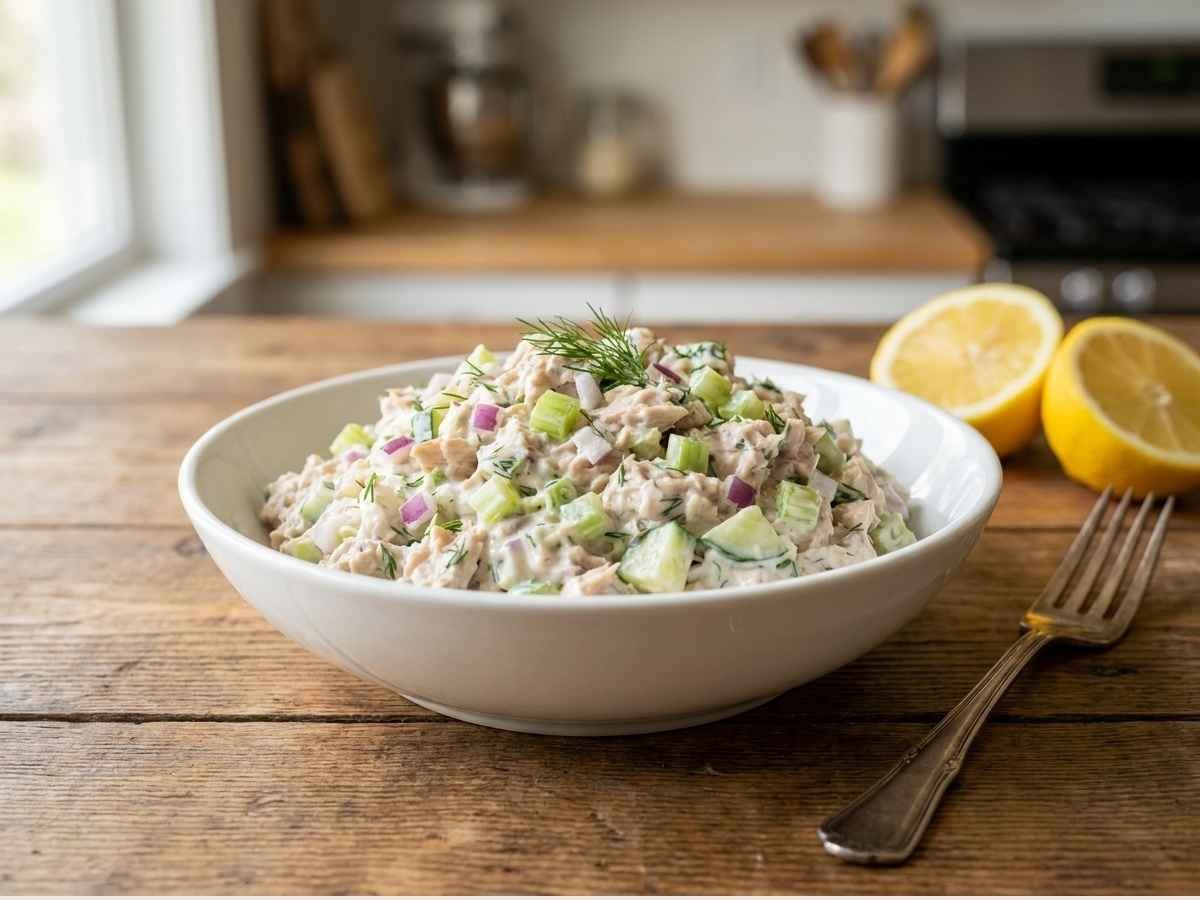
No-mayo tuna salad is one of the best decisions you can make for a quick, healthy lunch — and once you try it, you’ll never go back to the heavy, mayo-laden version. Whether you use Greek yogurt, creamy avocado, or a bright olive oil dressing, this lighter approach delivers everything you love about classic tuna salad without the greasy aftertaste. After years of testing recipes and exploring healthier lunch options, I can say this: ditching the mayo doesn’t mean ditching the creaminess.
The frustration of opening your fridge, wanting a protein-packed lunch, and feeling stuck with a jar of mayo is real. This guide solves that problem completely. We’ll walk through the best mayo substitutes, a foolproof base recipe, flavor-building tips, and smart serving ideas — all backed by real culinary knowledge and a deep understanding of what actually makes a tuna salad satisfying, nutritious, and genuinely delicious.
Why Make No-Mayo Tuna Salad in the First Place?
Most of us grew up eating tuna salad loaded with commercial mayonnaise. Many traditional tuna salads are made with commercial mayonnaise and can be high in unhealthy fats, sugar, and other additives, which is a real concern if you’re trying to eat clean. The no-mayo tuna salad trend isn’t just a health fad; it’s a genuine flavor upgrade that opens up a world of brighter, fresher taste profiles your standard mayo version never could.
Beyond health, going mayo-free forces you to be more creative with your ingredients. Olive oil brings out tuna’s natural brininess, coating the flakes lightly and making them taste fresher, while ingredients like capers, fresh dill, and lemon juice create layered complexity. A no-mayo tuna salad is leaner, more vibrant, and — when done right — far more satisfying than anything from a deli counter.
Best Substitutes for Mayo in No-Mayo Tuna Salad
Choosing the right mayo substitute is the heart of any great no-mayo tuna salad. Each alternative brings its own texture, flavor profile, and nutritional edge. The secret is matching the substitute to your preferred taste — whether you want something tangy, nutty, rich, or ultra-light. Understanding these differences helps you build a personalized bowl you’ll actually crave every week.
The most popular choices — Greek yogurt, avocado, olive oil, and cottage cheese — each solve the mayo problem in a different, delicious way. You can make a no-mayo tuna salad with Greek yogurt or smashed avocado, and both are great for different reasons. Knowing when to use which one is what separates a good tuna salad from a great one.
Greek Yogurt – The Creamy Protein Booster
By using plain Greek yogurt, which packs 16 grams of protein in a 3/4 cup serving, you’re upping the protein content considerably more than if you were using mayonnaise. It delivers that familiar creamy texture while adding a slight tang that pairs beautifully with lemon juice and fresh dill. Use full-fat Greek yogurt for the richest mouthfeel, or 2% for a lighter option.
Avocado – The Healthy Fat Champion
Avocado replaces mayo with monounsaturated healthy fats and a buttery, rich texture. Using avocado adds healthy fats and plenty of fiber — two things mayonnaise simply cannot provide. Mash it coarsely for texture or blend it smooth for a more uniform spread. Add a squeeze of lemon immediately to prevent browning.
Olive Oil – The Mediterranean Classic
Extra virgin olive oil is the purest, most versatile no-mayo base you can use. Instead of big spoonfuls of mayo, drizzle in a tablespoon or two of olive oil per can of well-drained tuna, then toss gently — the goal is to coat the tuna, not saturate it. Pair it with lemon juice, Dijon mustard, and capers for a Mediterranean-style dressing that feels elevated and restaurant-worthy.
Cottage Cheese – The Underrated MVP
Mixing tuna with cottage cheese has the added bonus of making an already protein-rich lunch even more heartily nutritious, and if you’re not keen on the knobbly texture, you can use an immersion or standard blender to blend it smooth. It’s one of the most calorie-efficient options on this list, with a mild flavor that lets every other ingredient shine.
Classic No-Mayo Tuna Salad Recipe (The Base)
Every great no-mayo tuna salad starts with a reliable, clean base recipe you can customize endlessly. This healthy tuna salad without mayo is very similar to chicken salad without mayo, and it’s just as delicious — it stayed perfectly cold, and the protein kept us full through a long day. That’s the beauty of this recipe: it’s sturdy, practical, and never disappoints.
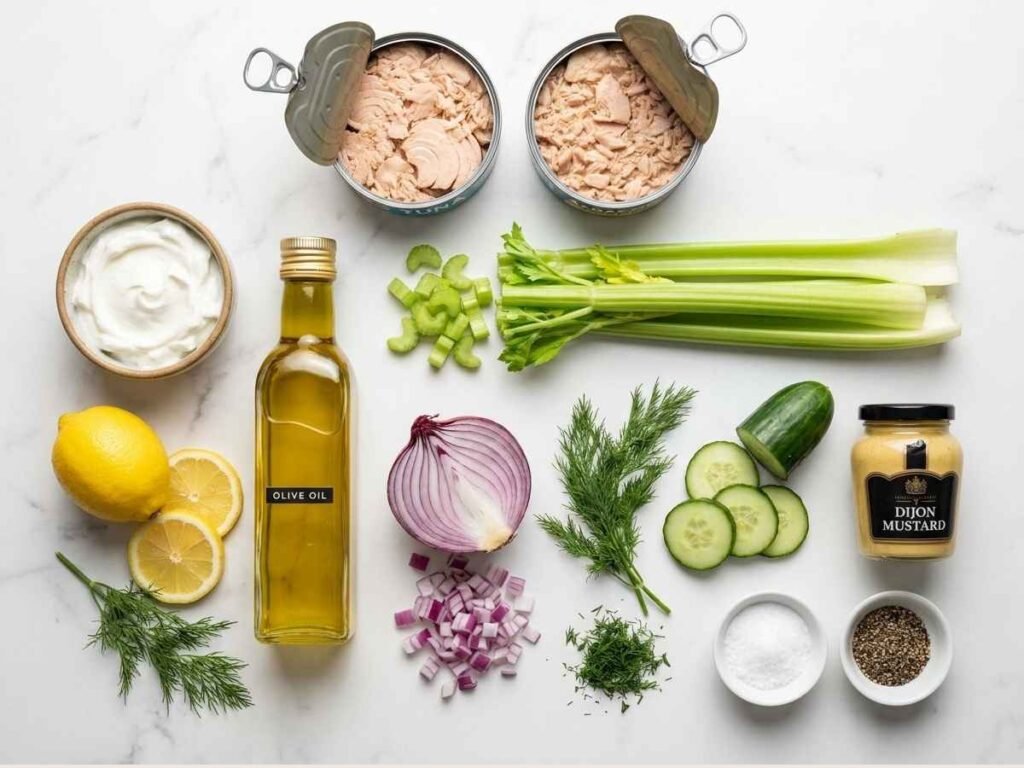
The simplest version uses canned tuna, olive oil, lemon juice, celery, and red onion. With only 6 ingredients, you can make the best tuna salad you’ll ever taste — loaded with crunchy veggies and dressed with fresh lemon and olive oil, you won’t miss mayonnaise for a second. It takes about 10 minutes flat and serves as a canvas for any direction you want to take it.
Basic No-Mayo Tuna Salad (Serves 2–3):
| Ingredient | Amount | Purpose |
|---|---|---|
| Canned tuna (drained) | 2 × 5 oz cans | Lean protein base |
| Extra virgin olive oil | 2 tbsp | Binding, flavor, healthy fat |
| Fresh lemon juice | 1.5 tbsp | Brightness, acidity |
| Celery (diced) | 2 stalks | Crunch, fiber |
| Red onion (diced) | ¼ cup | Sharp, savory flavor |
| Cucumber (diced) | ½ cup | Refreshing crunch |
| Salt & pepper | To taste | Seasoning |
No-Mayo Tuna Salad Ingredients That Maximize Flavor
The right combination of ingredients turns a simple no-mayo tuna salad into something genuinely memorable. Flavor builders like capers, Dijon mustard, fresh herbs, and pickled elements make a huge difference. Lime or lemon juice adds acidity to brighten the dressing and also tames the “fishiness” of the tuna, while a robust extra virgin olive oil adds fruity notes and a peppery finish.
Fresh herbs deserve special attention here. Chopped dill is the classic pairing for tuna — its slightly anise-like flavor cuts through the richness and adds a brightness that dried spices simply can’t replicate. Fresh herbs make everything taste better, and tuna salad is no exception — chopped dill or basil add brightness and distinctive flavor, while parsley and cilantro bring a fresh green note. Don’t skip them.
How to Make No-Mayo Tuna Salad Step by Step
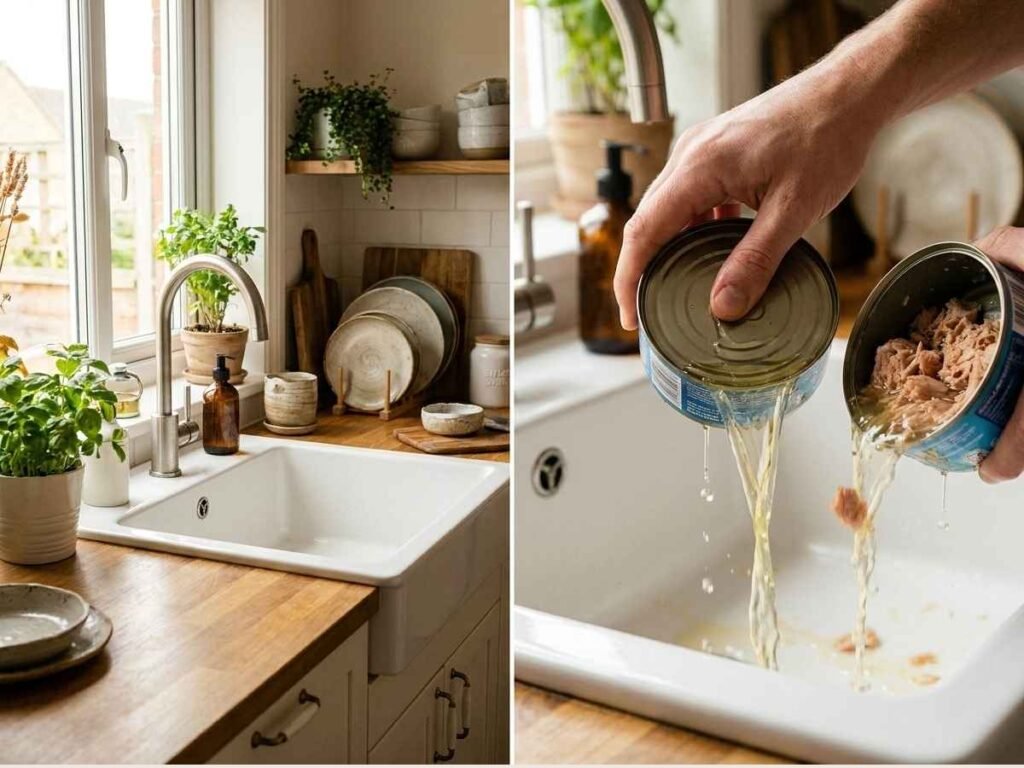
Making a great no-mayo tuna salad is genuinely simple — the whole process takes under 10 minutes from pantry to plate. The most important step is draining your tuna thoroughly; excess moisture dilutes your dressing and makes the salad watery and flat. Press the tuna firmly against the side of the can lid before mixing.
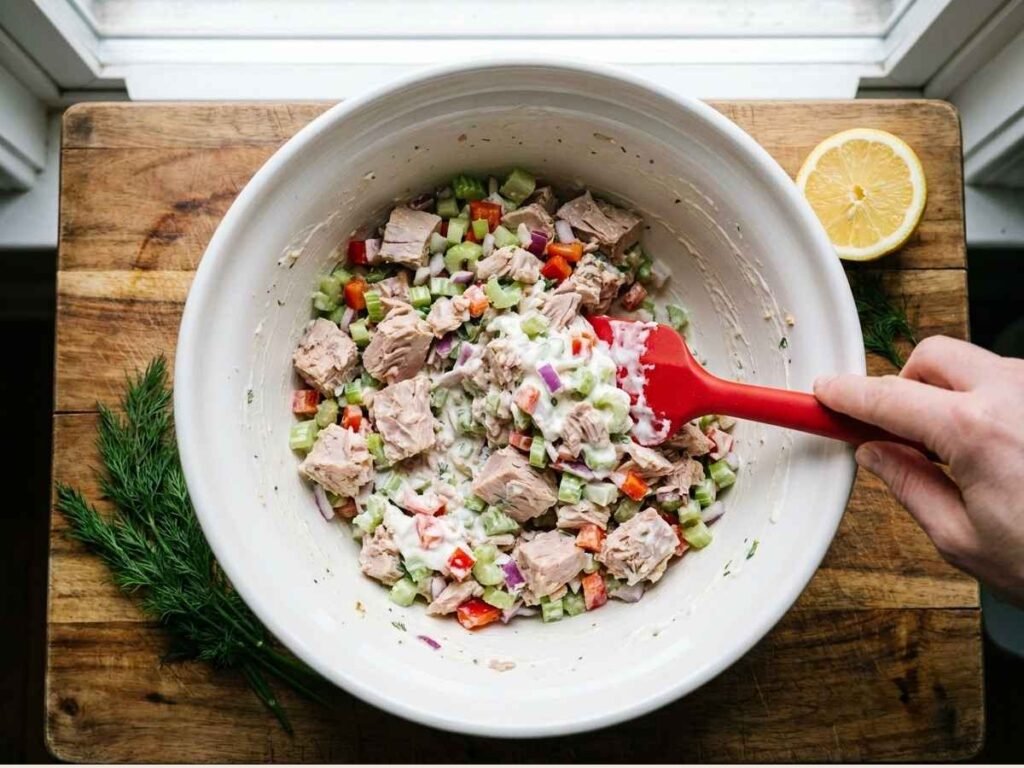
No-mayo tuna salad made with Greek yogurt
Add celery, onion, and cucumber to a large bowl first. Then drain the cans of tuna, squeezing out as much of the liquid as possible. Scoop the drained tuna into the bowl, add lemon juice, olive oil, salt and pepper, then stir and enjoy. If you’re using Greek yogurt as your base, whisk it first with lemon juice and mustard for a smoother, more cohesive dressing before folding in the tuna.
No-Mayo Tuna Salad Variations Worth Trying
Once you’ve mastered the base no-mayo tuna salad, the variations are practically endless. Each direction offers a completely different eating experience while keeping the core lean, high-protein structure intact. Mediterranean, spicy, Asian-inspired, and loaded veggie versions are all outstanding choices that never feel repetitive.
For a protein-mega-version, consider adding a hard-boiled egg. This recipe has over 30 grams of protein thanks to the addition of a hard-boiled egg, with some Mediterranean flavors going on — the tanginess of the capers and fresh lemon juice keeps everything light and fresh. For a plant-forward twist, fold in chickpeas, kalamata olives, and artichoke hearts for a hearty, satisfying bowl.
Popular No-Mayo Tuna Salad Variations:
| Variation | Key Swap/Addition | Best Served With |
|---|---|---|
| Mediterranean | Olive oil, capers, olives, cucumber | Pita bread, grain bowl |
| Greek Yogurt Herb | Greek yogurt, dill, mustard, lemon | Toast, lettuce wrap |
| Avocado Lime | Mashed avocado, lime juice, cilantro | Crackers, tortilla wrap |
| Spicy Cottage Cheese | Blended cottage cheese, chili flakes | Open-faced sandwich |
| Hummus-Based | Hummus, olive oil, lemon | Veggie dippers, pita |
Nutrition Facts for No-Mayo Tuna Salad
One of the most compelling reasons to make no-mayo tuna salad is the nutritional profile. Canned tuna is a lean protein powerhouse that’s both affordable and pantry-stable. Removing mayo dramatically reduces the calorie and saturated fat count while actually improving the micronutrient density of your meal.
A no-mayo tuna salad made with yogurt and cottage cheese contains approximately 103 calories per serving, with 17.3 grams of protein, 0.7 grams of fat, and 5.4 grams of carbohydrates — a strikingly lean macronutrient profile. Compare that to a mayo-based version which can easily run 250+ calories with 18–20 grams of fat per serving. The swap pays real nutritional dividends.
No-Mayo vs. Mayo Tuna Salad Nutrition (per serving):
| Metric | No-Mayo Version | Mayo-Based Version |
|---|---|---|
| Calories | ~105–150 | ~220–280 |
| Total Fat | 0.7–8g | 14–20g |
| Protein | 16–22g | 14–18g |
| Saturated Fat | Trace–1g | 2–4g |
| Added Sugar | 0g | 0–2g |
How to Serve No-Mayo Tuna Salad
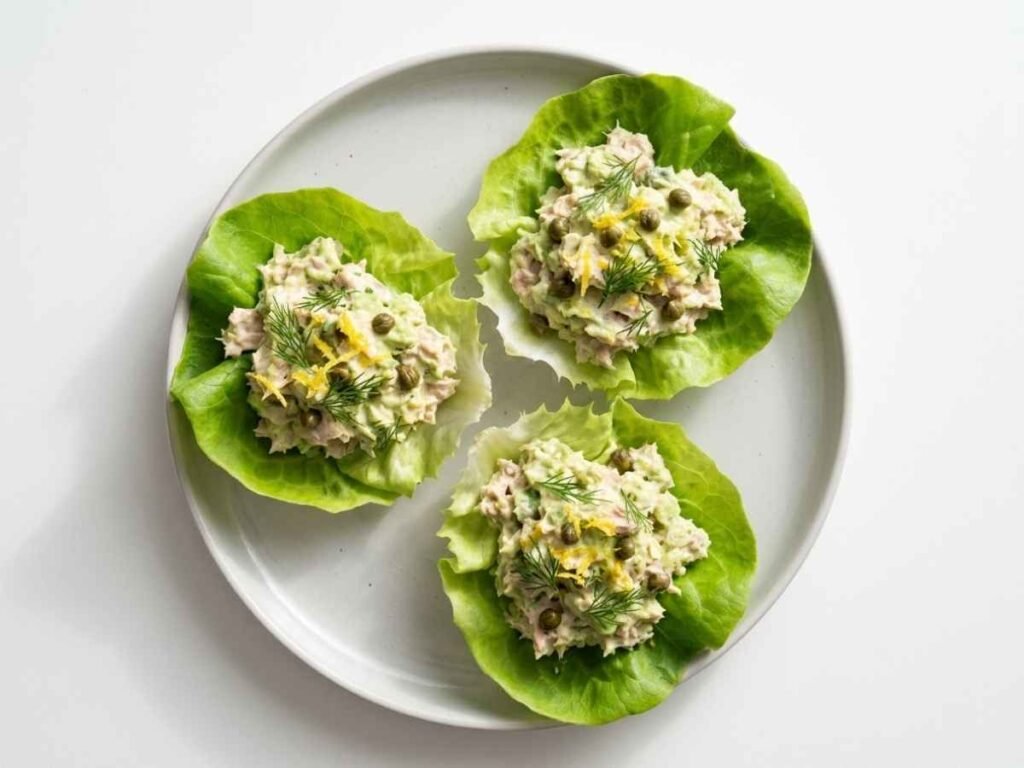
A great no-mayo tuna salad deserves equally great serving options. Thinking beyond the standard sandwich opens up a much more exciting meal rotation. This healthier tuna salad pairs with lettuce wraps, salad or grain bowls, open-faced toasts, or stuffed inside whole wheat pita bread — making it one of the most versatile lunch proteins in your weekly rotation.
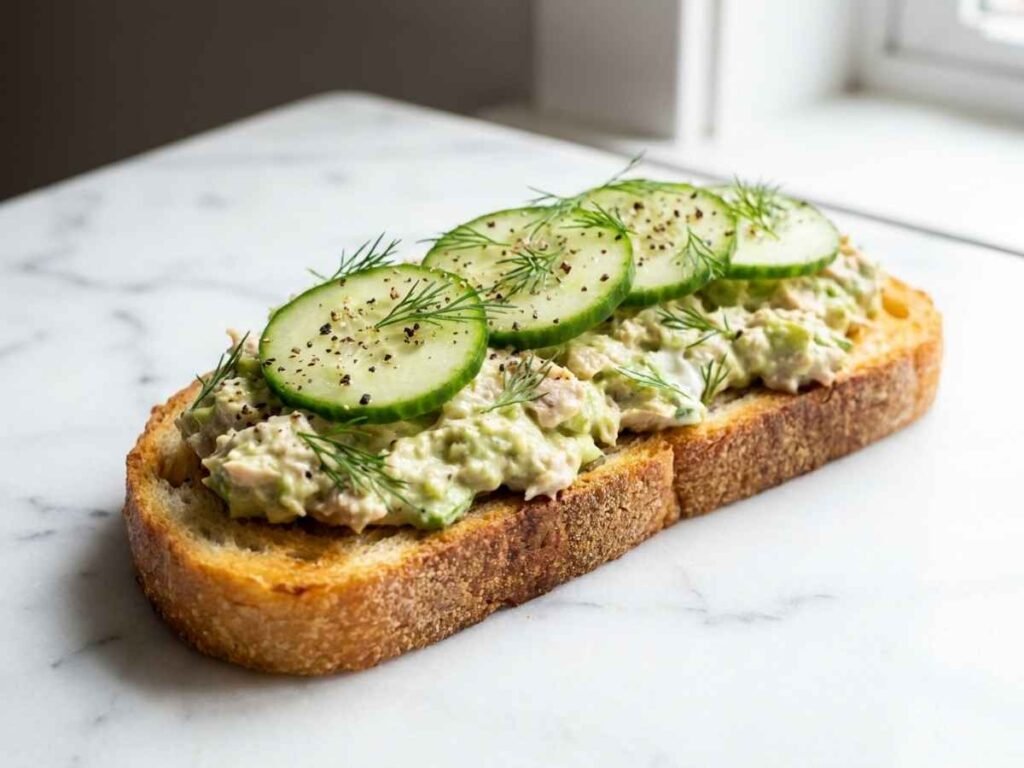
For low-carb days, celery sticks and cucumber rounds make perfect edible “vessels” for scooping up your no-mayo tuna salad. For heartier appetites, pile it onto thick sourdough toast with sliced tomato and a few leaves of butter lettuce. You can also sandwich it between two slices of excellent bread, dip into it with chips, or go low-carb and serve with veggies — there’s truly no wrong answer here.
Storing Your No-Mayo Tuna Salad the Right Way
Proper storage is what makes or breaks a meal-prepped no-mayo tuna salad. The good news is that this version keeps remarkably well in the refrigerator — often better than mayo-based versions, which can develop an odd flavor as the mayo oxidizes over time.
Store any leftovers in an airtight container in the refrigerator, where they will last about 3–4 days. If you’ve used avocado as your base, it’s best consumed within 24 hours to prevent browning — even with lemon juice. Greek yogurt and olive oil versions hold up best over multiple days. Always give the salad a quick stir before serving, as some separation is completely normal.
FAQ
What can I mix with tuna instead of mayo?
The best mayo substitutes for tuna salad include plain Greek yogurt (for creaminess and added protein), mashed avocado (for healthy fats and fiber), extra virgin olive oil with lemon juice (for a Mediterranean-style dressing), or blended cottage cheese (for a high-protein, low-fat base). Each option creates a distinctly different but equally delicious result.
Is no-mayo tuna salad healthier than regular tuna salad?
Yes, in most cases. Removing mayo significantly reduces calories, saturated fat, and added sugar while maintaining — or even increasing — the protein content, especially when using Greek yogurt or cottage cheese as the base. The result is a leaner, more nutrient-dense meal.
Can you make no-mayo tuna salad ahead of time?
Absolutely. No-mayo tuna salad made with Greek yogurt or olive oil stores well in an airtight container for up to 3–4 days in the refrigerator. Avocado-based versions should be eaten within 24 hours since avocado browns quickly despite the lemon juice.
Does no-mayo tuna salad taste good?
Yes — many people actually prefer it. The absence of mayo lets the natural, briny flavor of the tuna come through more clearly. With ingredients like lemon juice, fresh dill, capers, and mustard, the flavor is brighter, fresher, and more complex than a mayo-heavy version.
Is canned tuna healthy to eat regularly?
Canned tuna is a lean protein source that works in many different recipes and is a great choice for a healthy meal. Since tuna is a large fish, it tends to be high in mercury, so you should be cautious not to eat too much, too often. Most nutrition guidelines suggest 2–3 servings of canned light tuna per week as a safe, healthy amount. Simply Whisked
What herbs go best in no-mayo tuna salad?
Fresh dill is the classic choice, adding brightness and a delicate anise note. Fresh parsley, chives, basil, and cilantro all work beautifully depending on the flavor profile you’re building. Dried dill is a good pantry substitute when fresh isn’t available.
Conclusion
A great no-mayo tuna salad isn’t a compromise — it’s an upgrade. With the right base (Greek yogurt, avocado, or olive oil), the right crunch vegetables, and a hit of lemon juice and fresh herbs, this lighter version is brighter, leaner, and more satisfying than anything you’d make with a jar of commercial mayo. Whether you’re eating clean, managing macros, or simply craving something refreshing, this recipe delivers every single time. Bookmark it, batch it, and make it yours.
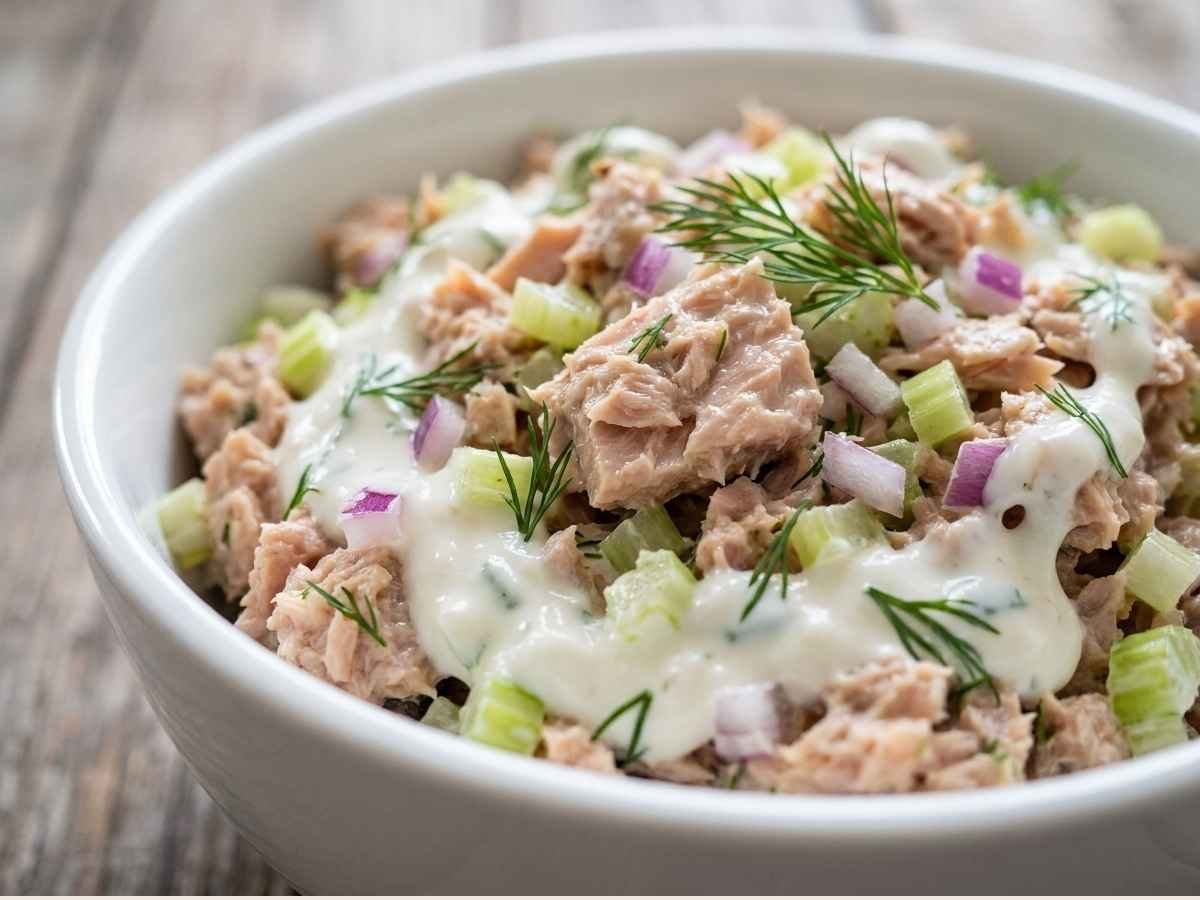

No-Mayo Tuna Salad
Ingredients
Equipment
Method
- STEP 1 — Drain the Tuna Thoroughly
- Title: Drain the Tuna
- Instruction:
- Open both cans of tuna and drain all liquid completely. Press the tuna firmly against the inside of the can lid or use a fine mesh strainer to squeeze out as much moisture as possible. This step is crucial — excess liquid will make your no-mayo tuna salad watery and bland. Well-drained tuna holds the dressing better and gives you a firmer, more satisfying texture.
- STEP 2 — Mix the No-Mayo Dressing
- Title: Prepare the No-Mayo Dressing
- Instruction:
- In a large mixing bowl, whisk together the Greek yogurt, extra virgin olive oil, fresh lemon juice, and Dijon mustard until smooth and well combined. This creamy no-mayo base is the heart of the recipe — the Greek yogurt adds protein and tang, the olive oil adds healthy fat and richness, and the lemon juice keeps everything bright and fresh. Taste and adjust the balance before adding the tuna.
- STEP 3 — Prep the Vegetables
- Title: Chop the Vegetables
- Instruction:
- Finely dice the celery, red onion, and cucumber on a clean cutting board. Keeping the pieces small and uniform ensures every bite has the perfect balance of crunch, flavor, and creaminess. Fresh dill and parsley should be chopped just before using for maximum aroma and flavor impact in this healthy tuna salad.
- STEP 4 — Combine Everything
- Title: Mix the Tuna Salad
- Instruction:
- Add the well-drained tuna to the mixing bowl with the dressing. Using a fork, gently fold the tuna into the Greek yogurt and olive oil dressing — do not overmix. Overmixing breaks down the tuna too much and creates a mushy, paste-like texture. Add the diced celery, red onion, cucumber, fresh dill, parsley, kosher salt, and black pepper. Fold gently until just combined. If using optional add-ins like capers, hard-boiled egg, or avocado, fold them in at this stage.
- STEP 5 — Taste and Adjust
- Title: Season to Taste
- Instruction:
- Taste your no-mayo tuna salad and adjust the seasoning as needed. Add more lemon juice for extra brightness, a pinch of salt for depth, or a touch more Dijon mustard for tang. This is the step most people skip — but it’s what separates a good tuna salad from a truly great one. Every can of tuna has slightly different salt levels, so always taste before serving.
- STEP 6 — Chill and Serve
- Title: Chill Before Serving
- Instruction:
- Cover the bowl with plastic wrap or transfer the tuna salad to an airtight container. Refrigerate for at least 15 minutes before serving. Chilling allows all the flavors to meld together beautifully — the lemon, dill, and mustard deepen, and the texture firms up slightly. Serve cold on toast, crackers, lettuce wraps, sandwiches, or over mixed greens.
Notes
Use canned tuna packed in water for a lighter no-mayo tuna salad. Oil-packed tuna works too — just reduce the olive oil slightly since the tuna already carries oil. Wild albacore tuna gives the firmest texture and cleanest flavor. ★ GREEK YOGURT TIP:
Use plain, unsweetened Greek yogurt only. Flavored yogurts will completely change the taste. Full-fat Greek yogurt gives the creamiest result; 2% works well for a slightly lighter version. ★ AVOCADO VARIATION:
Replace Greek yogurt entirely with ½ mashed ripe avocado for a dairy-free no-mayo tuna salad. Add lemon juice immediately after mashing to prevent browning. This version should be eaten within 24 hours. ★ OLIVE OIL ONLY VERSION (Mediterranean Style):
Skip the Greek yogurt entirely and use 2.5 tablespoons extra virgin olive oil + 2 tablespoons lemon juice for a clean Mediterranean no-mayo tuna salad. Add capers and fresh herbs for maximum flavor. ★ MEAL PREP:
This no-mayo tuna salad stores well in the refrigerator for 3–4 days in an airtight container. Stir before each serving. Do not freeze — Greek yogurt and vegetables separate when frozen. ★ MERCURY NOTE:
Canned tuna, especially albacore, contains mercury. Most nutrition guidelines recommend limiting to 2–3 servings per week for adults and less for pregnant women and children. ★ SERVING IDEAS:
— Tuna salad sandwich on whole wheat or sourdough
— Open-faced toast with sliced tomato
— Stuffed inside avocado halves
— Over mixed greens as a protein salad bowl
— Scooped with celery sticks or cucumber rounds (low-carb)
— Rolled inside butter lettuce leaves
— On crackers as an appetizer
NUTRITION FACTS (Per Serving — Approximate)
Based on: Greek yogurt + olive oil base, no optional add-insServing Size: ~¾ cup (approx. 180g)
Servings: 3 Calories: 185 kcal
Total Fat: 7g
Saturated Fat: 1.2g
Trans Fat: 0g
Unsaturated Fat: 5.8g
Cholesterol: 35mg
Sodium: 480mg
Total Carbohydrates: 4g
Dietary Fiber: 0.8g
Total Sugars: 1.5g
Added Sugars: 0g
Protein: 25g
Vitamin A: 6% DV
Vitamin C: 8% DV
Calcium: 6% DV
Iron: 8% DV
Potassium: 280mg
Omega-3 Fatty Acids: ~600mg
Emma Collins is a home cook and food writer who shares easy tuna salad recipes, healthy meal prep ideas, and simple seafood dishes made with fresh, everyday ingredients.